The Blue Ridge Marathon is dedicated to ensuring the safety of all participants, volunteers, and spectators. We race rain or shine, but if officials deem the is course unsafe because of weather conditions, here’s what you need to know.
Weather Policy
Race officials may cancel, delay, or change the event in case of extreme weather or other conditions that may affect the safety and health of participants. The race start can be delayed for a maximum of one hour. If severe weather hasn’t cleared within one hour, officials will make a decision to further delay and/or modify the course OR the race may be canceled. The race director and medical director, in consultation with law enforcement, fire/EMS, National Park Service, and other officials, will monitor the weather and make a decision if any action is necessary.
Communication
During the race, communication about the race status will be in the form of the Event Alert System at aid stations, staff vehicles, and the Blue Ridge Marathon race app. Updates will also be sent out on Blue Ridge Marathon Facebook and Instagram accounts to keep friends and family informed.
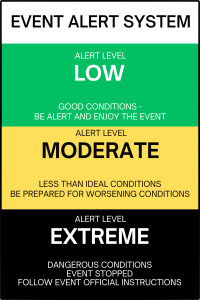
- The Event Alert System pictured here will be posted at each aid station with color-coordinated flags indicating the real-time alert level for the event.
- A black flag means the course is closed and runners must follow race officials’ instructions to shelter in place.
- A yellow flag means continue running, but be alert because conditions may worsen.
- A green flag means continue running, conditions are good.
- If a shelter in place is called:
- Zone Captains will notify marshals at each location. Volunteers will be asked to shelter in their cars or nearest shelter location and return to their position once the event is restarted. Volunteer course marshals will be released from their positions if the race is canceled.
- Runners will be directed to take shelter at the nearest designated shelter location. If you refuse to take shelter and continue, you do so at your own risk.
- Race Pause:
- The race director may decide to pause the event after the race has started if weather conditions deteriorate. When it is determined the threat has cleared and it is safe to resume, the course may be modified and/or cutoff times may be adjusted to ensure a timely finish. An adjusted finish will not be more than one hour past the originally scheduled ending of the event, or 4:05 pm.
- In the event of a race pause, official times or placement awards will not be awarded to those who finish after the pause.
- Virtual: In the event of a pause or cancellation, all participants who started the race but did not finish before the course was paused or shut down will be transferred to the virtual event. We recommend that you use your own personal timing device in the event that the race is paused so you can keep track of your personal time for the virtual event. Participants may upload their race time and distance in the virtual results. An email with specific instructions in this instance will follow the event. Only runners who START the race will have this option.
Refunds:
Entry fees are nonrefundable. Once race day has arrived, fixed costs are incurred whether the race is held to completion or not.
Check the marathon website, event app, Facebook and Instagram for weather updates during the race.